Kauai farmers’ plight underscores need for local food production
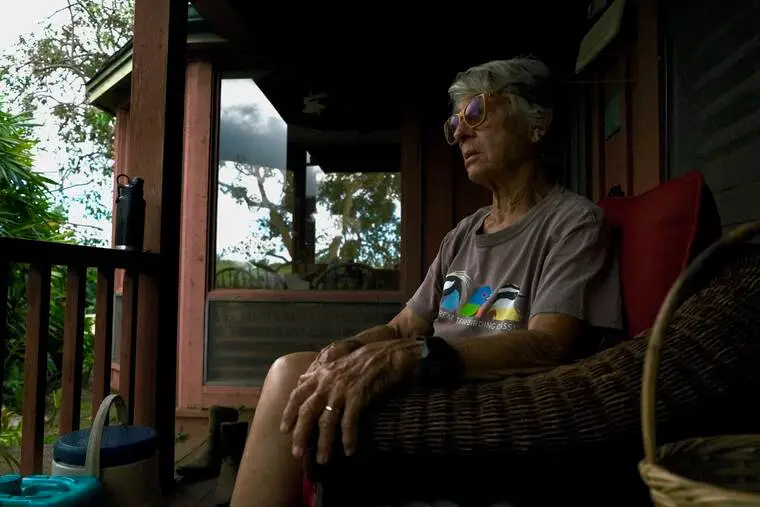
KILAUEA, Kauai — Inside her Kilauea home Monday night, Hurricane Lowell’s howling winds were the only thing Louisa Wooten could hear.
Read more How the UH and New Mexico State football teams match up
It was the first hurricane she’s experienced at her 3-acre property, which is home to the island’s sole dairy farm, Kauai Kunana Dairy. Between two properties — her son manages the family orchard on 7 acres down the road — there’s around a dozen goats and hundreds of fruit trees.
The family has produced and sold goat cheese and organic fresh fruit and vegetables at farmers markets and to restaurants since the farm was founded in 1999.
Around 5 a.m. Tuesday — first light after the storm — Wooten grabbed a flashlight and walked outside. Goats were loose. Trees were broken. Fruit littered the ground. Debris was everywhere.
Wooten first caught the goats and moved them to an area where a fence was still standing. Then she and her husband grabbed chain saws to clear the road enough so they could drive out.
By Friday, Wooten had salvaged as many fallen fruit as she could to sell at an upcoming farmers market. But she was worried the quality of their fruit would suffer from having plunked to the ground, and there was no telling how long it will take to replace the lost trees — she estimated around 50 — and replenish the crop.
“This is really hard because we have all these mature crops now that we’re losing,” Wooten said. “We’re going to lose pretty big.”
To ensure their best-selling products — soursop puree and goat cheese — don’t spoil, Wooten has been running generators to maintain her freezers and fridges at a cost of around $100 a day for fuel. She’s hoping she doesn’t have to run the generators for too long, noting Kilauea was the last place to get power back after Hurricane Iniki ravaged Kauai on Sept. 11, 1992.
The area didn’t get power back then until after Thanksgiving, she recalled.
“If there’s ever a time to support local farmers, it’s right now,” Wooten said. “This really hits below the belt.”
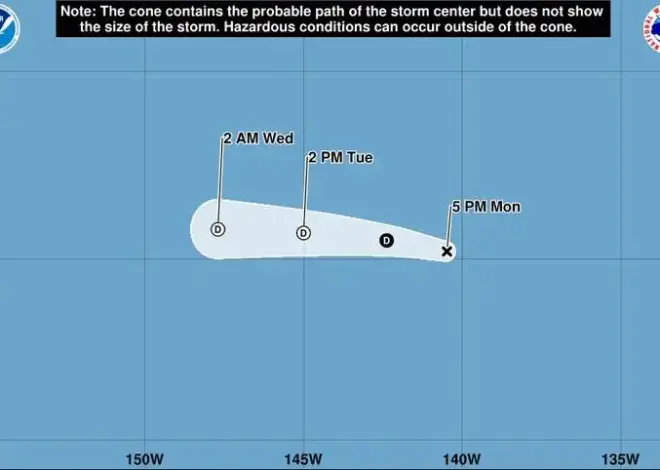
Hurricane Lowell roared through the western end of the Hawaiian island chain last week, causing extensive property damage on Kauai and cutting power to more than 90% of the island. The storm also is being blamed for two confirmed fatalities, with a third death under investigation.
The latest storm only added to the woes of farmers statewide who have been severely impacted by a recent string of natural disasters, including flooding on Oahu caused by back-to-back Kona-low storms in March and Hurricane Lala on Hawaii island in August.
The ongoing power and water outages from Hurricane Lowell underscore the need to support local food production, farmers say, while helping to make the islands more resilient to natural disasters.
Hawaii imports 80% to 90% of its food, according to a state Department of Business, Economic Development and Tourism report in 2012, the most recent data available. The dependency makes the state “particularly vulnerable to natural disasters and global events that could disrupt shipping and our local food supply,” the report said.
Replacing just 10% of food imports with locally produced food would generate an additional $188 million in sales, $47 million in earnings, $6 million in state tax revenues and more than 2,300 jobs, the report said.
Despite the stakes, the number of Hawaii farms has decreased over the past decade, hitting Kauai the hardest. From 2017 to 2022, the state lost 10% of its local farms, according to the 2022 Census of Agriculture report by the U.S. Department of Agriculture. While the number of farms on Oahu increased by 8% and Maui County showed no change in that time period, Hawaii County lost 14% of its farms and Kauai County lost a whopping 32%.
Prioritizing local
In the days following Hurricane Lowell, customers waited in lines at major grocery stores for hours to buy shelf-stable, mostly imported food, noted Megan Fox, executive director of Malama Kauai, a local food production nonprofit.
“You see pictures of shelves empty and people are like, ‘Oh my god!’ But they’re not lining up that way at farmers markets,” she said. “If you’re not buying local food on a weekly basis, how do you expect them to stay alive so that they’re around?”
Malama Kauai has been working as a community resiliency hub in Lowell’s wake, distributing cash grants, food and ice to families in need while also providing extra support for impacted farmers by coordinating damage assessments and additional grants.
Many of the food donations are shelf-stable items shipped from overseas, she said. Meanwhile, local farmers, bakeries and ranchers have products that can reach customers directly. Fox said local government, response organizations and big-box stores should prioritize locally produced food, which can help grow the local economy and increase long-term resiliency.
At Aloha Ola Farms in Kilauea, Lowell crushed Brianna and Corey Ansley’s greenhouse and tore the roof off their home. They lost a fair amount of fruit, Brianna Ansley said, but were already planning on replacing their roof and had the new one ready to be installed, and their losses were far less than their fellow farmers.
Read more Elena Rybakina tops Aryna Sabalenka to win US Open
Supporting the state’s self-sufficiency is a key reason why the Ansleys decided to continue their family farm, which was formerly known as Fehring Family Farm Stand.
“The Native Hawaiians were completely self-sufficient and now we’re at 95% dependency (on imports). That’s slightly insane in my mind,” Corey Ansley said. “Considering we’re called the Garden Isle, we should be able to provide more for our local community.”
Local produce also has a longer shelf life than imported, he noted, because it’s near the source and doesn’t need to spend two weeks on a boat to get here, which also cuts carbon emissions.
Ripening fruit
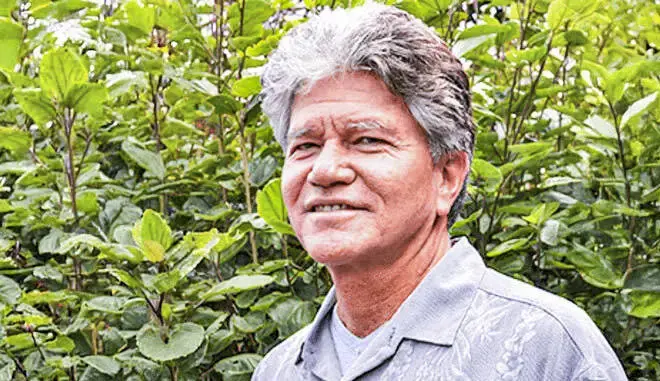
Lowell was the first hurricane to blow through Ned and Marta Whitlock’s 28.5-acre regenerative farm, Moloa‘a Organica‘a, established in 2002. The storm dislodged thousands of fruit, especially mangoes, and broke several trees, including all of the banana trees that once produced 200 pounds of fruit a week.
With bananas now unable to grow for at least a year, that adds up to around 10,000 pounds of fruit, Ned Whitlock estimated.
Lowell also snapped avocado and papaya trees and corn stalks. The soursop trees “took it pretty heavy,” Witlock added, along with a few timber trees. With most of the debris removed by Friday, the Whitlocks and their team were sorting fruit that had fallen to the ground, salvaging everything they could to sell at a farmers market.
“We’re just used to taking blows and keeping on,” Whitlock said. “Right now, my biggest concern is making payroll.”
Several weeks worth of fruit dropped at one time, which means the farm has to rush to sell much larger quantities than usual in a shorter amount of time, as it all ripens. There also will be a large gap in production while waiting for new crops to mature.
Whitlock said he plans to take advantage of any government grants and programs that are offered.
“It definitely helps keep us floating better,” he said. “But I’m not whining about it. If there’s something there, cool.”
Moloa‘a Organica‘a, located in Moolaa near Kilauea, focuses on diverse plantings that restore the soil as they grow — something Whitlock said should be implemented by more growers. He also lamented the scarcity of agricultural lands available to small-scale farmers.
“Until there’s more distribution of land somehow where folks can make a go of it, I don’t have a lot of hope in a way,” he said. “It’s not like there’s more and more farmers.”
‘Lines
everywhere’
Investing in local food production for resiliency would take a mindset shift for most residents, according to Xochi Weigel, who homesteads in Wailua. She hopes to start a nonprofit that can help residents grow food in their backyards.
“We’ve all become so accustomed to the convenience lifestyle of just being able to pop in and out of Safeway,” she said. With climate change increasing the likelihood of natural disasters in Hawaii, Weigel said it’s more important than ever for residents to learn how to live off the land and support those who are producing food locally.
Her homestead sustained minor damage from Lowell, but Weigel and her partner were able to eat the fruit and vegetables they were growing rather than stress about food scarcity at stores.
“We were feeling really good and secure, but then you see everybody else scrambling,” she said. “It’s hard to feel good when you don’t have more and more to offer.”
Weigel hopes Lowell is an opportunity for residents and government leaders to examine their dependence on current food systems and whether they should change how they invest in it.
“Why are we trying to get back to a system that so easily collapsed overnight?” she said. “With the infrastructure of the island, there’s one highway that goes all the way around. There’s lines everywhere for the stores. There’s lines everywhere for the traffic. What can we do so that people don’t have to leave their immediate neighborhoods and communities to have … safe access to food and water?”
Read more Mariners set season highs in hits, runs in historic rout of Athletics