BLNR still trying to reach deal in opihi case
A year after three men were caught taking over 4,000 opihi from a protected area on the north Kona coast, the Board of Land and Natural Resources is still working to reach a settlement in the case.
Read more Clippers’ historic punishment a ‘setback,’ not ‘permanent damage,’ commissioner says
A year after three men were caught taking over 4,000 opihi from a protected area on the north Kona coast, the Board of Land and Natural Resources is still working to reach a settlement in the case.
At the board’s meeting last week, members discussed a recommendation from the Department of Aquatic Resources to level fines of $10 for every opihi, in addition to administrative fees, amounting to a total of $46,186, split evenly between each of the three individuals.
While DAR staff said that the maximum penalty could be over $4 million, the actual amount charged is up to the board’s discretion and the $10 per opihi recommendation is in line with internal guidelines. The matter was carried over from a June 12 meeting during which board members asked staff to continue efforts to negotiate with the three respondents.
The three men, Brandon Carvalho, Kaipo Botelho-Matthey and Keaupililani Solomon-Lewis, were caught by Division of Conservation and Resources Enforcement officers on Sept. 18, 2025, following a tip from a community member that they had been witnessed taking opihi from the Kaupulehu Marine Reserve.
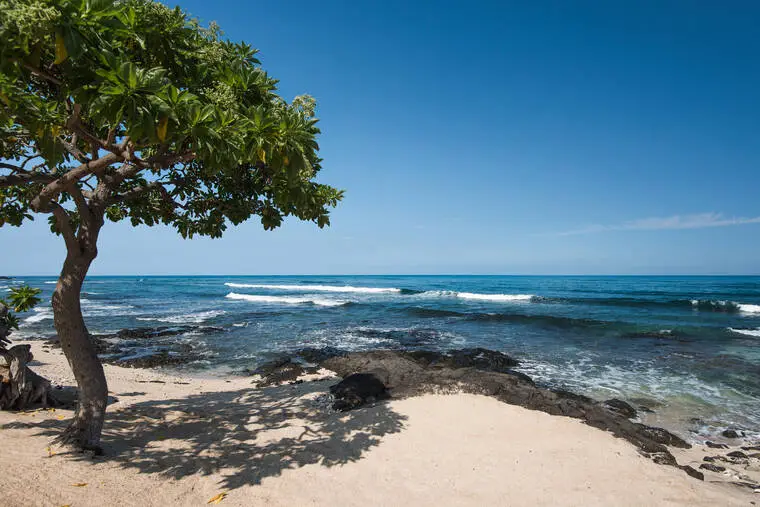
The reserve is a marine protected area that is currently undergoing a restoration effort known as “Try Wait,” which has designated the area as a no-take zone. The men were found to have bags containing 4,068 opihi. Opihi are a type of limpet native to Hawaii that are found nowhere else in the world and are considered a local delicacy.
Botelho-Matthey has said he and the others were gathering the opihi for family celebrations and that he was unaware of the restrictions. He spoke over the phone at last week’s meeting.
“I had no idea that it was criminal or that it was really a crime to take opihi for a wedding and a graduation party,” he said, adding that his kupuna used to pick opihi.
BLNR member Wesley “Kaiwi” Yoon bristled at this as a suggestion of justification.
“It’s not about the wedding and the graduation; it’s about the resource …,” he said. “Our kupuna would not want an unlimited and fragile and fleeting resource to be harvested.”
He also took issue with the act being portrayed as a cultural practice and said it was important to send a clear message with this case that such behavior is not tolerated.
“What cultural practice, Hawaiian cultural practice … which one, demands that you take multitudes more than what your ohana needs. Which cultural practice is that?” Yoon asked during the meeting.
“The issue is larger than this meeting right now,” he added. “I’m afraid that others will use this and say, ‘Oh, it’s OK to take 4,000 opihi’ or whatever, 3,000, in a protected area because, you know what, the Hawaiians are doing it, and you know what, they call it a Hawaiian cultural practice — it’s not.”
The confiscated opihi were returned to the reserve, but most were not expected to survive.
Read more Puna arson suspect arrested at airport
Botelho-Matthey and Solomon-Lewis, who was also present at the meeting via phone, said they were apologetic for their actions, but could not afford the fines.
“I just need to get food on the table right now and I work and now we have some more fines, it’s like ‘wow,’” Botelho-Matthey said. “I understand that we did wrong picking too much opihi for these parties, but we never like sell them or anything.”
The mother of Keaupililani Solomon-Lewis, Michelle Lewis, also spoke by phone at last week’s meeting and asked the board to reconsider the fines.
“Accountability and compassion do not have to oppose each other,” she said. “We can protect our resources while also ensuring that our people receive a fair process. As a mother and auntie, it was also my responsibility to share these cultural practices with them. I’m truly sorry for not educating these young men.”
Charlie Taylor, a legal research specialist for DAR, said the three respondents had previously declined an offer which included five days of community service in exchange for a $5,000 dollar reduction to each of their fines. However, he said it was still on the table.
Both Botelho-Matthey and Solomon-Lewis said during the meeting that they were willing to do community service, but were not willing to accept the fines, which Taylor said amounted to a denial of the deal.
“We barely keep making enough money for put food on the table at home, and we can’t afford this thing. That’s crazy,” Solomon-Lewis said.
Several members of the public spoke at the meeting in support of the fines.
“The fine seems like a lot, but it’s only because of the sheer amount of opihi that were taken,” said Kaikea Nakachi. “I’m hearing grad party and a wedding — 4,000? I don’t believe it. To me, I have no doubt that it was to be sold, and if it is, that voids any claims of cultural rights, let alone the fact that it’s a closed area.”
Rebecca Most, the executive director of Hui Kahuwai, a nonprofit created to care for the Kaupulehu area, where the opihi were taken, also spoke.
“I apologize if my voice is shaky, I’m pretty emotional after watching this whole exchange. This whole thing hurts on so many levels,” she said. “Our members have been working with the state to steward the waters of Kaupulehu and Kuki‘o for generations, and were the ones to establish the Kaupulehu Marine Reserve and the 10-year rest period known as “Try Wait.”
“The 4,068 opihi are a symbol of how quickly the gains of the “Try Wait” rest period can be wiped out, and each of these opihi represents 10 years of sacrifice and discipline. This incident impacted us really deeply,” she continued. “They also represent the future opihi that would have been spawned for the next generations if they had not been poached. It is important that a clear message is sent that there are consequences for this poaching.”
Following deliberation during a closed-door executive session, board members offered an additional 30 days for DAR and the board chair to negotiate a deal with Botelho-Matthey and Solomon-Lewis, which they accepted. Carvalho was not present and as a result was assessed the $15,395 fine.
Read more Yamamoto allows 1 hit over 7 scoreless as Dodgers blank Reds
Email Grace Inez Adams at [email protected].