UH Hilo tapped to help boost US seafood supply
The University of Hawaii at Hilo will play a key role in a new national effort to strengthen America’s seafood supply and expand sustainable aquaculture.
Read more Behind Jordan Staal’s 2 goals, Hurricanes level Stanley Cup Final 2-2
The National Oceanic and Atmospheric Administration on Tuesday announced the creation of the Cooperative Institute Fostering Aquaculture Research and Markets, or CIFARM, which is being funded by an initial $13.5 million investment for its first year.
This five-year cooperative institute aims to harness partnerships with researchers to unlock the potential of marine aquaculture in the U.S.
The University of New Hampshire will serve as the host institution, with UH participating as one of five core consortium members in this competitive national program.
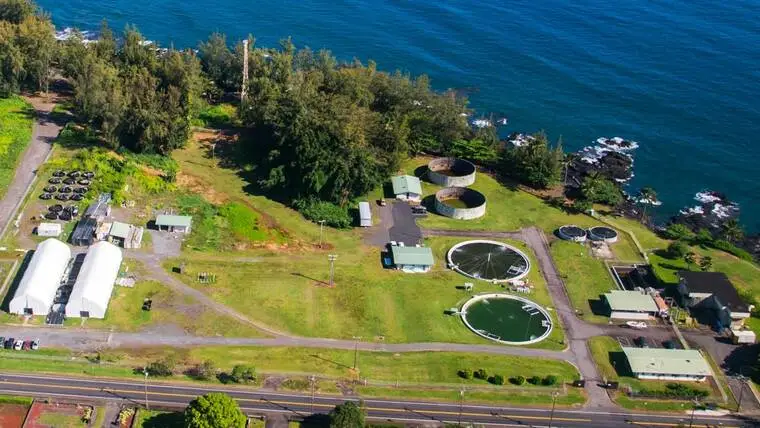
The UH research team is being led by associate professor Chatham Callan out of the UH Hilo Pacific Aquaculture and Coastal Resources Center in Keaukaha.
Callan is joined by co-investigators professor Maria Haws of PACRC, associate research professor Erik Franklin of the Hawaii Institute of Marine Biology in the School of Ocean and Earth Science and Technology at UH Manoa, Hawaii Sea Grant associate director Darren Okimoto, and several other UH faculty partners.
“Being selected as a core member of CIFARM is a testament to the decades of world-class aquaculture research happening right here in Hawaii,” Callan said in a press release. “Through our partnerships with Native Hawaiian communities, we draw on a tradition of ocean stewardship and fishpond engineering that stretches back centuries.
“Our UH team is excited to bring that unique Pacific perspective and expertise to the national stage,” he continued. “By focusing on cutting-edge tech, environmental forecasting, and real-world marine demonstration projects, we are actively building the blueprint for a more resilient, self-sufficient seafood industry.”
CIFARM’s core mission is to solve challenges affecting seafood producers and consumers and reducing the nation’s reliance on imported seafood.
Americans consume more than $24 billion in imported seafood annually, with approximately half estimated to be farmed overseas, according to the press release. By advancing domestic aquaculture, CIFARM aims to bolster national food security, create jobs and uplift coastal economies in complement to wild-capture fisheries.
Read more A wet start to the dry season in East Hawaii
The UH team will contribute to a broad range of research priorities. CIFARM researchers will investigate scientific solutions that can be leveraged for industry advancement.
Key focus areas include engineering and technology development, artificial intelligence for aquaculture, environmental observations and forecasting, and marine aquaculture demonstration projects.
The consortium will also conduct critical risk management, vulnerability analyses and seafood market research.
The Hawaii team will also partner with other researchers in the Pacific — including the University of Guam Sea Grant and the Marine and Environmental Research Institute in Micronesia — to extend CIFARM’s reach throughout the region.
“This partnership underscores the University of Hawaii’s vital role in advancing sustainable aquaculture systems that directly impact our global food supply,” Norman Arancon, director of the UH Hilo College of Agriculture, Forestry and Natural Resource Management, said in the press release.
“We have always championed practical, impactful science,” he said. “Through CIFARM, our researchers and students will be at the forefront of a $13.5 million national effort, utilizing Hawaii’s unique seascape to drive economic growth, bolster food security, and train the next generation of leaders in sustainable marine aquaculture.”
Hawaii Island is uniquely positioned for this work. It is already home to Blue Ocean Mariculture in Kona, currently the only offshore fish farm in the U.S., providing a vital connection to the consortium’s demonstration and commercialization goals.
In addition to UNH and UH, the network includes Hawaii Sea Grant, New Hampshire Sea Grant, the University of Miami, Florida Sea Grant, the University of Southern Mississippi, the Mississippi-Alabama Sea Grant Consortium, Hubbs-Sea World Research Institute, and California Sea Grant.
Read more Zverev tears down the wall to enter Grand Slam winners’ circle at French Open