Trump’s move to reopen fishing at monuments draws mixed reaction
President Donald Trump’s executive proclamation reopening three marine monuments to U.S. commercial fishing, including Papahanaumokuakea, is stirring debate.
Read more White Sox ride 7-run fifth past Shohei Ohtani-less Dodgers
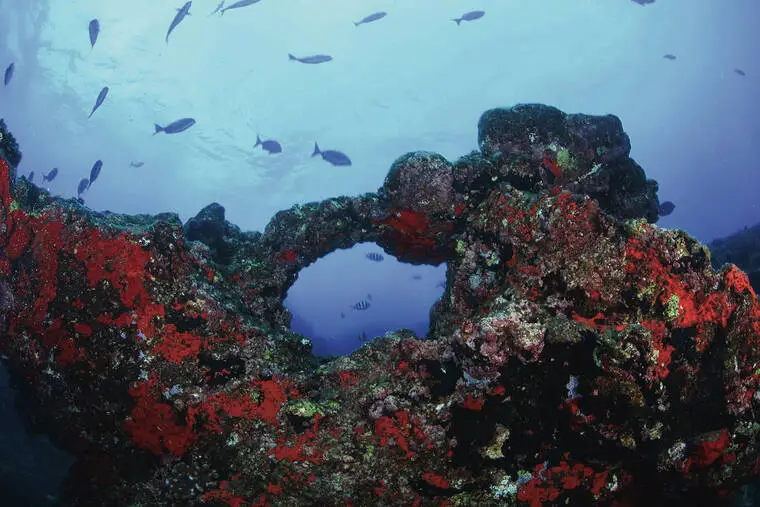
The move on Thursday would roll back protections for some 500,000 square miles of waters at Papahanaumokuakea Marine National Monument, the largest contiguous marine conservation area in the world and home to thousands of marine species, many of which exist nowhere else on Earth. It also reverses protections for portions of the Mariana Trench, and certain waters surrounding Rose Atoll in American Samoa.
The Trump administration says the proclamation removes unnecessary restrictions, opening “prized fishing grounds to hard-working American fishermen” to further economic opportunity and security.
Trump said it was his honor to lower seafood costs and “generate millions and millions of dollars in new business for our great, really great fishermen.”
While the Western Pacific Regional Fishery Management Council and longline fishermen welcomed the news as a step in the right direction, conservationists and Hawaiian cultural practitioners denounced it and are determined to fight it.
Earthjustice vowed to take legal action against the proclamation, saying Trump’s order threatens critical species’ habitat within and around the monument.
“Commercial fishing in our protected marine monuments would not only be disastrous for the environment, but also does nothing for the fishing industry,” said David Henkin, Earthjustice Mid-Pacific’s deputy managing attorney, in a statement. “Without fishing in the monuments, U.S.-based fisheries hit their catch limits for tuna every year.”
Science-backed management requires protected marine areas, he said, for the benefit of future generations.
“Safe havens allow marine life to maintain healthy populations and prevent corporate greed from stripping the ocean of life,” he said. “We’ll see the administration in Court.”
WESPAC, on the other hand, welcomed President Trump’s proclamation as an important step toward returning management decisions to the regional council process and the MagnusonStevens Fishery Conservation and Management Act.
“We are pleased that under the authority of the Magnuson-Stevens Act, the management of fishing in monument waters is returning to the fishery councils,” said council Executive Director Kitty Simonds in a news release. “The Council is committed to continue working together with our fishing communities in American Samoa, Hawaii and the Northern Mariana Islands to discuss and develop fishery management plans in these areas.”
The National Oceanic and Atmospheric Administration said the proclamation covers the “mau zone” and “ho‘omalu zone” at Papahanaumokuakea, along with areas seaward of 50 nautical miles.
NOAA said the action was the direct result of feedback from the U.S. fishing industry, and that previous prohibitions forced American fishermen further offshore into international waters, where they had to compete with poorly regulated foreign fishing fleets.
With the reopening of the monuments, NOAA said, “diligent and honest American fishermen” will have closer access to tuna and other pelagic species.
Eric Kingma, executive director of the Hawaii Longline Association, said he welcomed a science-based review from the U.S. Department of Commerce and NOAA that carefully considers the best available data, existing environmental protections, and cultural significance of Papahanaumokuakea to the Native Hawaiian community and people of Hawaii.
Read more Homeland Security funding bill draft includes Hawaii money, TSA cuts
He said the proclamation initiates a regulatory review process, however, and does not immediately reopen any portion of the monument expansion area. If access is ultimately approved, Hawaii-based vessels would continue operating “under some of the world’s most comprehensive fisheries management and conservation requirements.”
“Any future management decisions should be guided by sound science, respect for cultural and environmental values, and a balanced approach that supports conservation, food security, and the long-term viability of Hawai‘i’s longline fleet and associated local seafood companies,” he said in a statement.
Maxx Phillips, a senior attorney for the Center for Biological Diversity, said reopening the monuments was “more of a solution in search of a problem” — and that it will not lower seafood prices.
She called it a reckless attack on the world’s greatest ocean sanctuaries.
“Papahanaumokuakea is a sacred place and a refuge for endangered wildlife found nowhere else on Earth,” she said in a statement. “Opening all these protected waters to commercial fishing ignores science, undermines Native stewardship and risks irreparable damage to our oceans for no public benefit. We’ll fight hard against Trump’s short-sighted attempt to plunder these incredibly biodiverse waters.”
Kekuewa Kikiloi, co-chair of the Papahanaumokuakea Native Hawaiian Cultural Working Group, said the fishing industry is not having problems meeting quotas from fishing in international waters.
“There have been studies in the past five years or so that there’s a spillover effect from protections at Papahanaumokuakea,” he said. “When you create large-scale protected marine areas like that, and boundaries for fishing vessels, there’s been a dramatic increase in catch.”
The monument is a sacred space for the Native Hawaiian community, he said, linked to “our origin stories and a place where our spirits return after death.” Undermining these protections, he said, is like a “slap in the face.”
Jonee Peters, executive director of the Conservation Council for Hawaii, called it a sad day.
Monuments are established to protect the future of fish stocks and related ecosystems, she said. but commercial fishers are often indiscriminate in hooking nontarget species as by-catch, including threatened and endangered species.
“Commercial fishers also dramatically reduce the populations of the species that they target, affecting those species’ ability to reproduce and grow,” she said in a statement. “It is vital that Marine Protected Areas remain intact to protect the overall marine ecosystem and to allow targeted fish populations to grow, ensuring food security for Hawaii and the planet today and into the future.”
Earthjustice said Trump’s proclamation on Thursday follows similar moves to roll back protections at the Pacific Islands Heritage Marine National Monument last year, and the Northeast Canyons and Seamounts Marine National Monuments earlier this year.
Earthjustice sued the administration last May over the Pacific Islands proclamation on behalf of Kapa‘a, the Conservation Council for Hawaii, and Center for Biological Diversity.
A federal district court judge struck down the resumption of commercial fishing in the monument, saying that under the Magnuson-Stevens Act, the National Marine Fisheries Service must follow the lawful process to change commercial fishing regulations.
Read more Canada’s Larin rescues late draw against Bosnia in Group B opener