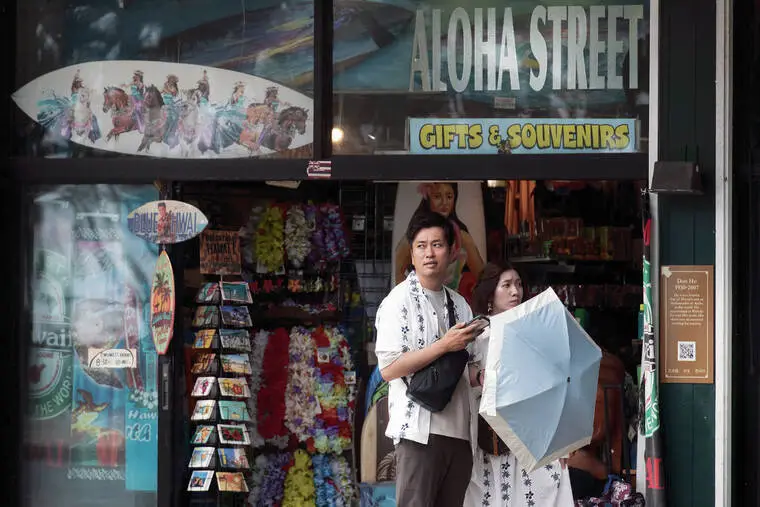
Pent‑up demand lifts Hawaii travel ahead of Fourth of July; outlook still mixed
Hawaii’s visitor industry is seeing a modest pick-up heading into the Fourth of July holiday driven by pent-up demand after spring’s Kona-low disruptions and spillover from FIFA World Cup travelers.
Read more Hawaii’s Finn Kearney transfers to rival Long Beach seeking playing time
Hawaii’s visitor industry is seeing a modest pick-up heading into the Fourth of July holiday driven by pent-up demand after spring’s Kona-low disruptions and spillover from FIFA World Cup travelers.
But hotel and travel analysts say it’s too soon to know whether the momentum will hold through the rest of the summer, with mixed indicators emerging, especially from Hawaii’s core U.S. market.
AAA expects 72.2 million Americans to travel at least 50 miles from home between June 27 and July 5 — slightly above last year’s record but a smaller year‑over‑year gain. Most of the increase is coming from cruises, buses and trains, while driving and flying remain essentially flat.
“While the overall number of Independence Day travelers appears to be plateauing, we’re still expecting record volumes this year,” said Stacey Barber, AAA’s vice president of travel.
AAA projects 5.85 million domestic air travelers over the holiday week, up 0.2% from last year and representing about 8% of all July Fourth travelers.
Oahu is having a solid week after softness in early June tied to booking delays and cancellations from the Kona‑low storms in March, said Jerry Gibson, president of the Hawai‘i Hotel Alliance. He said the Fourth of July period is typically strong for U.S. families and that America 250 celebrations may be adding lift.
“It wasn’t perfect in the beginning of summer, but this week has shown up well,” he said.
Gibson said July is usually Hawaii’s strongest month, and early signs point to families returning in larger numbers, helped by scorching temperatures across the continental U.S. and visitors extending trips after attending FIFA World Cup soccer matches, which run June 11 to July 19 across the U.S., Mexico and Canada.
He cited full flights, busy Waikiki restaurants and stronger group business.
“It’s kind of a last‑minute pick-up even from the first week of June,” he said.
Gibson also pointed to improving activity on Oahu’s North Shore, noting lines at Matsumoto Shave Ice in Haleiwa the past two weekends.
“Matsumoto’s the indicator and it was pumping,” he said.
Gibson added that hotel general managers on the neighbor islands also are reporting that business is “pretty well” paced heading into July.
Keith Vieira, principal of KV &Associates, Hospitality Consulting, said the recent summer uptick is real but fragile.
Vieira attributes the current rise in travelers to pent-up demand from those who canceled trips to Hawaii or put off booking a trip during the Kona-low storms.
“There were $300 million in cancellations for the bad weather and some people put off booking trips and now some of them are deciding, ‘Let’s come back,’” he said.
Vieira said Maui is seeing some of the strongest post‑storm gains, though it has further to go as it continues recovering from the Aug. 8, 2023, wildfires.
Read more UH Hilo athletics building to be renovated
According to Joshua Hargrove, general manager of the Westin Maui Resort &Spa, “We are continuing to see Maui come in strong, around 5% to 10% up (year-over-year), with summer following that pattern.”
But Vieira said airfare, gas prices and geopolitical uncertainty still are weighing on travelers, and Hawaii continues to feel the effects of inconsistent destination marketing. While the brand remains strong, he said, Hawaii’s status as a long-haul, leisure destination makes it more vulnerable to economic uncertainty.
“People don’t have to come here,” he said.
Airlines for America, or A4A, says U.S. carriers are taking steps to blunt soaring jet fuel costs ahead of a packed summer travel season driven by FIFA World Cup traffic and America 250 events. Carriers are cutting poorly performing routes, grounding older aircraft and raising some fees to avoid passing major cost spikes directly to consumers.
“U.S. airlines are currently eating most of the increased cost of jet fuel as they work to keep fares competitive for consumers and meet the summer demand,” said A4A President and CEO Chris Sununu in a statement.
Chris Kam, president and chief operating officer of Omnitrak, said national travel demand is softening as rising prices begin to bite. He said overall travel‑market penetration for U.S. and discretionary leisure travelers fell below prior‑year levels in May — the first time he’s seen both indicators slip in quite some time — and that mounting price pressure is now discouraging some trips.
Kam said TSA passenger screenings were down 1% in May, another first‑in‑a‑while decline, as travel costs outpaced inflation. At the same time, he said Hawaii’s air‑seat capacity is up 7.7% for the summer, with double‑digit growth to the neighbor islands.
“We have the capacity for growth, but the demand is uncertain due to the pricing,” Kam said, noting some travelers postponed spring trips during the Kona‑low storms and may now be rebooking.
The World Cup also may be contributing to the early‑summer bump, he said, with international visitors adding Hawaii side trips, especially from nearby host cities such as Los Angeles.
“This is a unique year for the Fourth of July because its America’s 250th. I don’t know how much that factors into a Hawaii travel decision, but a lot of destinations tied to American history are seeing a surge along with Washington, D.C.,” Kam said.
Industry leaders agree that early July is shaping up well, but Gibson said the real test will come later in the peak summer season, which runs from June 15 to Aug. 15, and into the fall shoulder season.
Kam said the mixed signals make it hard to read U.S. travel demand, with the affluent segment holding steady while budget travelers are still taking trips but shortening them or shifting from flying to driving.
At the same time, Kam said, some high‑end travelers are still price conscious and may opt to trade international vacations for domestic ones, which could benefit Hawaii even as the lower end of the market softens.
“If this is sustainable, that would be great,” Gibson said. “We weren’t looking for a great summer, we were looking for a good summer. We’re all hoping for a great summer.”
Read more US has luxury to rest players in group stage finale vs. Turkey

Related Posts

Sewer rate hike is proposed
UH Hilo athletics building to be renovated