Electric aircraft testing takes off in Hawaii
Real‑world testing of electric aircraft began in Hawaii on Thursday — a pivotal step toward evaluating whether zero‑emission planes can support interisland cargo and passenger service and help the state meet its aggressive climate goals.
Read more Which Rams will break out in 2026?
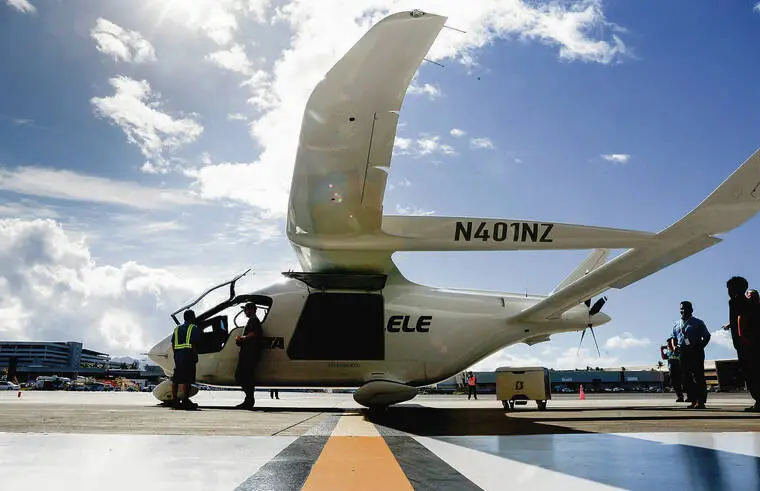
The six‑ to eight‑week program led by BETA Technologies and Surf Air Mobility Inc., with support from Hawaiian Airlines, will use BETA’s ALIA CTOL (conventional takeoff and landing) electric aircraft for precertification demonstration flights across the islands, gathering data on performance, charging, maintenance and operations. It is Hawaii’s first structured electric‑aviation trial, positioning the state as an early proving ground for technology that could cut emissions, reduce operating costs and improve rural air service.
Louis Saint‑Cyr, president of Surf Air Mobility, the parent company of Mokulele Airlines, told the crowd gathered at Hawaiian’s maintenance hangar for the program launch that it is “a defining moment in aviation in Hawaii.”
He said the work underway “will impact how we incorporate electric aviation and mobility in the future,” showing how the aircraft performs on “real communities on real routes” and potentially making travel “more affordable and dependable” for residents who rely on air service.
Saint‑Cyr said fueling the ALIA for a Honolulu–Mokulele route costs $25 compared with $350 or more for conventional aircraft, and that electric planes require far fewer parts and far less maintenance. He said Surf Air has invested $22 million in improving Hawaii service and has ordered 25 all‑electric ALIA CTOL aircraft, expected to arrive in Hawaii and the continental U.S. by early 2028. Whether Hawaii launches cargo or passenger service first will depend on which aircraft arrive.
“We aren’t just here to talk about the future,” he said. “We’re here to fly it.”
State Department of Transportation Deputy Director Curt Otaguro said the demonstration “marks a milestone” and expands the state’s clean‑energy aviation efforts, which already include electrified ground equipment and solar installations.
Hawaiian Airlines CEO Diana Birkett Rakow said the trials align with the airline’s joint net‑zero strategy with Alaska Airlines and its broader modernization plan. She said the company is focused on efficient operations, new aircraft, sustainable aviation fuel and advancing technologies like BETA’s electric aircraft, using carbon credits only as needed. “Those are the ones that will transform our industry to have a strong and more sustainable future,” she said.
Birkett Rakow added, “It’s on all of us to do the demos, to understand the technology, to work together to advance the technology, to get it certified, to get it into operations, and to make sure that we’re creating that future for the next generation and for the generation that’s flying today.”
Read more OHA reopens study of KITV purchase after vote shift
State Sen. Lynn DeCoite (D, East Maui- Upcountry-Molokai-Lanai- Kahoolawe) said the technology could help address long-standing transportation challenges for neighbor island residents.
“For those of us who live on the neighbor islands, transportation is more than just convenience. It is a lifeline,” she said. She described the demonstration as an “opportunity to build a transportation system that is more reliable, more affordable, more sustainable.”
BETA aircraft sales team member Sheradin Fabrizius said global interest in electric aviation is growing. Before arriving in Hawaii, the ALIA CTOL, or conventional takeoff and landing, completed demonstration tours in Japan and New Zealand, while the ALIA VTOL, vertical takeoff and landing, has toured 13 countries in Europe with deployments in Norway and Scotland.
Fabrizius said electric aviation has been especially well‑received in Hawaii, where sustainability values and geography support early adoption. “We were prepared for there to be friction and objections, and instead we were met with open arms,” she said, noting clear cargo and passenger applications.
In the coming weeks, the ALIA will fly routes from Honolulu to Lanai, Molokai and Maui, along with intraisland flights between Hilo and Kona. Fabrizius said the trials will test pilot training, cargo loading and battery performance. “We’re going to expose the pain points … and start to identify the infrastructure needs,” she said, encouraging stakeholders to share “questions, comments, good and bad” as the aircraft moves toward commercial service.
Fabrizius said BETA is pursuing Federal Aviation Administration certification of the electric aircraft and is “engaged with the regulators,” and is “increasing conformity towards type certification.”
The FAA aircraft conformity process verifies that an aircraft conforms to its approved type design and is properly configured for the operator’s certified program and operations.