Bill to extend the county’s homeless fund another two years advances
The County Council’s first reading Wednesday of a bill that would extend the county’s Homeless and Housing Fund to June 2029 followed the same script as a Sept. 16 meeting of the council’s Finance Committee, with a 7-2 vote to advance to a second and final reading.
Read more PHOTOS: Cougars sweep Cowgirls
The County Council’s first reading Wednesday of a bill that would extend the county’s Homeless and Housing Fund to June 2029 followed the same script as a Sept. 16 meeting of the council’s Finance Committee, with a 7-2 vote to advance to a second and final reading.
The vote was exactly the same as in September, with aye votes from Chairman Holeka Inaba, who introduced the measure, and council members Heather Kimball, Jennifer Kagiwada, Michelle Galimba, James Hustace, Ashley Kierkiewicz and Rebecca Villegas. Voting no were Vice Chair Dennis “Fresh” Onishi and Matt Kaneali‘i-Kleinfelder.
The fund, established as a pilot program in 2022, allocates a minimum of $9 million yearly from property tax revenue to local nonprofits to address the problem of homelessness. Bill 192 would extend the program, which is set to expire in June 2027, an additional two years, to June 2029.
The council earlier this year called for an audit of the Homeless and Housing Fund, which has awarded more than $33.5 million in grants to nonprofits. That audit is still pending.
Both Onishi and Kaneali‘i-Kleinfelder have said they want to see the audit report prior to an affirmative vote to extend the program.
There was a large number of testifiers Wednesday, overwhelmingly in support of extending the program, mostly from the nonprofits that have received the grants, such as Big Island Substance Abuse Council, CARE Hawaii, Going Home Hawaii and Project Vision.
Les Estrella, president and CEO of Going Home Hawaii — a nonprofit with the mission of reintegrating the previously incarcerated into the community — said he’s experienced homelessness and knows “what a second chance can mean.”
“In the first six months of this year alone, Going Home Hawaii received 260 referrals in Hilo and Kona,” Estrella said. “Of those, 237 were people who were homeless or at risk of (being) homeless. We housed 91 of them during that time. But the impact goes beyond getting someone into housing. It’s helping them stay housed, find work, take care of their health and rebuild relationships.
“As people move forward, their families benefit, our workplaces, our economy — and the community benefits.”
Mark Schultz, nurse practitioner with Project Vision Hawaii, said he’s “appreciative of the funding” that allows him “the chance to provide street medicine on the sidewalks of Hilo.”
“These are many people who have been disconnected from healthcare, who had bad experiences in a variety of settings and who simply choose not to access care,” Schultz said. “Your funding has allowed me to go out onto the sidewalk and meet these people where they’re at, try to figure out what’s going on and how to reconnect them to healthcare. How to, in some cases, save their lives.”
He said that he encountered two unhoused individuals with cancer. They’ve received treatment and are “still alive at this point.”
Read more Meeting today regarding Naʻalehu interim disaster housing
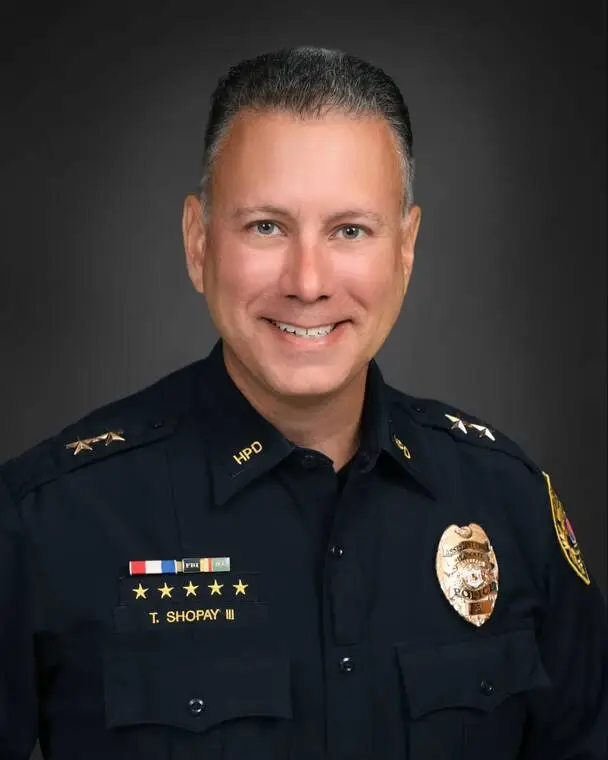
Hawaii Police Department Assistant Chief Thomas Shopay, who commands the department’s Administrative Bureau, told council members calls for assistance with homeless individuals is “a concern for the police department.”
“As you all know, being houseless or housing-challenged is not a crime, but usually, the police happen to be the first ones to be called to deal with these issues, so it is an incredible tax on our personnel,” Shopay said. “Hours for service that are used to address these issues and having additional resources available, or proper resources available to address these issues, would be something that is very helpful.”
Shopay said it’s difficult to track calls involving homeless — which can include “disturbances, someone needing assistance, there’s a wide variety.”
“Usually, there’s an underlying mental health issue … it’s a challenge for police, because we’re not experts in that area. Very loosely, looking at this current year, there have been over 2,000 calls for service” involving homeless individuals islandwide, he said.
“It is a considerable draw on our budget and our resources where we should be fully addressing crimes, but we cannot turn down a call for service from the public, because we are the first line of defense.”
Shopay estimated that work-hours spent by officers to respond to calls involving homeless individuals cost taxpayers “probably close to half-a-million dollars.”
Under questioning by Kaneali‘i-Kleinfelder, Shopay said the department is seeing “a year-to-year increase” in such calls.
“It’s not exponential, but there is the increase,” Shopay said. “I haven’t had the opportunity to dive into the data to see if it’s the same people we’re dealing with over and over again, you know, getting progressively worse.”
Kehaulani Costa, the county’s housing administrator, said she’d like to bring in program staff before the measure’s second reading to provide council members with “a good picture of … the depth of our accountability.”
“The pathway to housing stabilization for many individuals is very complex,” Costa said. “… We’d like to put most of our funds in diversion and prevention, and I think that … you don’t always see the efforts on diversion and prevention, how we prevent individuals from homelessness.
“You’ve seen the increase in chronic homelessness. What’s been challenging … and I’ve only been in this position for two years is … we’ve shifted from we need more housing to we also need more mental and behavioral health services.
Read more Dodgers one step closer to third straight World Series. Were the Braves overmatched?
“So, that piece, I think, is the critical piece that is missing.”
Email John Burnett at [email protected].