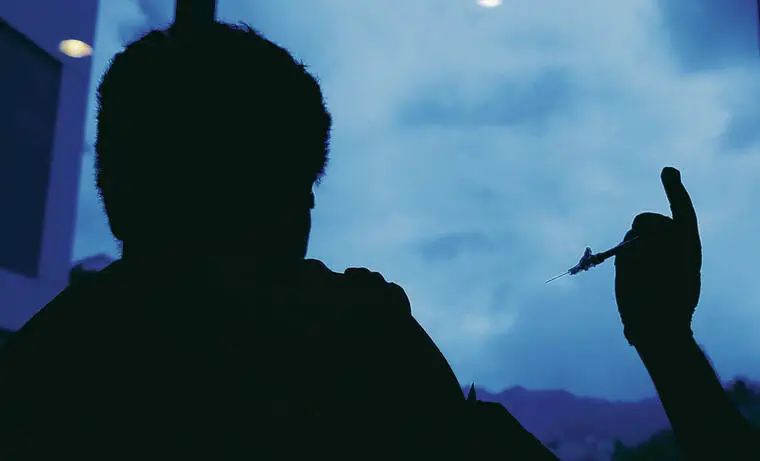
Hawaii’s kindergarten vaccination rates drop across the board
Kindergarten vaccination rates in Hawaii have declined across-the-board, according to newly released data.
Read more Klay Thompson negotiates buyout from Mavericks, clearing pathway to Heat
Vaccination rates for diseases in every category — from measles to whooping cough and polio — are all down for the 2025-2026 school year compared with 2024-2025, according to the U.S. Centers for Disease Control and Prevention.
For Hawaii, the drops are a reversal of three years of improvements, according to the state Department of Health. The reversal comes in the midst of conflicting information between pediatrician groups and the federal government over recommended childhood vaccines.
At the same time, the religious exemption rate in Hawaii increased to 6.0% for the 2025-26 school year, up from 5.5% the previous year.
State Epidemiologist Dr. Sarah Kemble said these overall trends are worrisome.
“Looking at last year over a trend line, the trend wasn’t really clear,” she said. “We knew there had been a drop-off after the pandemic in large part due to access issues, but we were seeing maybe a little stabilization or increase, so we were hopeful. This is more clearly going in the wrong direction.”
Hawaii’s vaccination rates also fall below the national average, and below targeted rates for herd immunity, the point at which enough of the population is vaccinated to prevent spread and protect vulnerable individuals.
For measles, mumps, and rubella, Hawaii’s kindergarten vaccination rates fell from 90.1% in 2024-25 to 89.3% in 2025-26. For diphtheria, tetanus, and pertussis (DTap), vaccination rates fell from 92.0% to 88.8%. The target rate for herd immunity is 95%.
It means more kids are vulnerable to potentially serious diseases such as measles, when there are growing numbers of measles outbreaks on the U.S. continent.
Last year, a multi-county outbreak in Texas resulted in more than 700 measles cases, nearly 100 of which were hospitalized, and two deaths in school-aged children. Pertussis, or whooping cough cases, are also on the rise in Hawaii. Kemble said there were more than 200 cases last year — a 10-year high — and that this year is on a similar track.
Kemble said she is concerned about the declines, as each vaccine protects against a disease with its own risks and outcomes.
Polio, a highly infectious viral disease, is of great concern since it invades the nervous system, with potentially severe outcomes.
“People are less conscious now because it’s been so long since we had endemic polio,” she said. “In the past, that was really one of the ones people were most fearful about because polio causes paralysis in children — and that’s lifelong”
While some kupuna who survived polio may remember those days, she said, much of the public today does not have a concrete memory of its debilitating effects.
Hawaii’s kindergarten vaccination rates for polio dropped to 89.5% in 2025-26, compared to 92.5% in 2024-25.
Read more Big Island residents brace for Moke while still recovering from Lala
The drop in vaccination rates for hepatitis B is also concerning, she said, because of possible perinatal transmission, or the passage of the virus from a mother to a baby during pregnancy.
“It can sometimes be silent,” she said. “Some people might not know they’re a carrier. Getting that vaccine early provides that lifelong protection and it protects your baby. Or if you get pregnant and have a child, if you’re immune, you’re protecting your infant as well.”
The downward trend comes as the federal government makes major revisions to childhood immunizations under the leadership of U.S. Health Secretary Robert F. Kennedy Jr., a prominent vaccine critic who links routine childhood immunizations with autism.
Earlier this month, President Donald Trump signed an executive order reducing the recommended childhood vaccinations to 11 instead of 18 and that combination shots like measles, mumps and rubella be split into separate shots.
The American Academy of Pediatrics criticized the move as unscientific and dangerous, and that no new evidence justified these changes to childhood immunization guidance.
The Hawaii Department of Health, as part of the West Coast Health Alliance, is still aligned with the vaccine recommendations from AAP, according to Kemble.
DOH says the schedule “reflects the most current science-based safety and benefits of immunizations that protect children and adolescents from infectious diseases.” The WCHA also endorses the recommended vaccines issued by the American College of Obstetricians and Gynecologists during pregnancy.
“Parents want to protect their keiki,” said DOH Director Dr. Kenneth Fink in a news release. “With the increase in conflicting information about vaccines, it’s understandable that parents may be uncertain how best to do so. However, these rates mean too many children are vulnerable to infection and communities are at increased risk for an outbreak of a vaccine preventable disease — like we’re seeing with measles on the mainland.”
“We strongly recommend the routine childhood vaccines to protect the health of loved ones, and we encourage parents with questions to discuss them with their child’s healthcare provider.”
Kemble said DOH will continue to offer vaccination clinics at schools, and give families easier access to vaccines through its Healthy Hawaii Partners Program.
DOH will also be working to get a clear message out that it still supports the vaccines recommended by the AAP, and to be a trusted source of science-based information as more people look to social media for vaccination guidance. Fall vaccine recommendations will be out soon.
“So that’s part of the work ahead of the department is looking at,” she said. “How do we reach people where they’re at in different spaces, and also make sure that questions are being addressed? If this is a reflection of changing attitudes, changing concerns about vaccines, then let’s have that conversation.”
Read more ‘We got that hunger’: First-year head coach Padillio ready to lead ‘Riders in ‘26

Related Posts

Remembering Hawaii’s 9/11 victims

World Manta Day returns today
