State challenges EPA decision
The state Department of Health and a coalition of environmental organizations are challenging a decision by the U.S. Environmental Protection Agency to partially reject Hawaii’s plan to improve air quality and reduce pollution-related haze.
Read more Victor Wembanyama takes another step toward being NBA’s center of attention
The state Department of Health and a coalition of environmental organizations are challenging a decision by the U.S. Environmental Protection Agency to partially reject Hawaii’s plan to improve air quality and reduce pollution-related haze.
Both filed petitions this week in federal court.
As part of Hawaii’s Regional Haze State Implementation Plan, Hawaiian Electric had committed to ramp-down operations at several of its fossil-fuel based power plants — including the Kanoelehua Hill plant in Hilo — by 2028, instead of installing pollution controls in order to comply with regulations.
However, Hawaiian Electric has since backed off from that commitment, notifying the EPA it would no longer voluntarily retire the plants by a set deadline and that closures would instead be dependent on the timing of renewable energy projects.
“Rather than prematurely retire generators or install prohibitively expensive and infeasible controls whose cost would show up in customers’ bills, we proposed a practical compromise that gave us the ability to keep the lights on at the lowest cost if there were delays in bringing new renewable projects online … .” Mike DiCaprio, Hawaiian Electric vice president of power supply, said in a statement. “We’re still committed to retiring these plants in a timeframe close to our original plans.”
The EPA cited this as justification for its partial disapproval of the state’s Regional Haze State Implementation Plan.
“EPA has determined that Hawaii’s plan to shut down these fuel oil-fired units, without consent from the units’ owner, does not comply with the Clean Air Act and is not necessary to meet Regional Haze Requirements,” it stated in a press release following the decision in May.
Isaac Moriwake, managing attorney for the Mid-Pacific Office of Earthjustice, one of the groups challenging the ruling, said that the EPA, under the current administration, is using decisions like this to allow companies like Hawaiian Electric to delay transitioning away from fossil fuels and toward renewable energy.
Read more Hawaii driver’s licenses, state IDs get a redesign
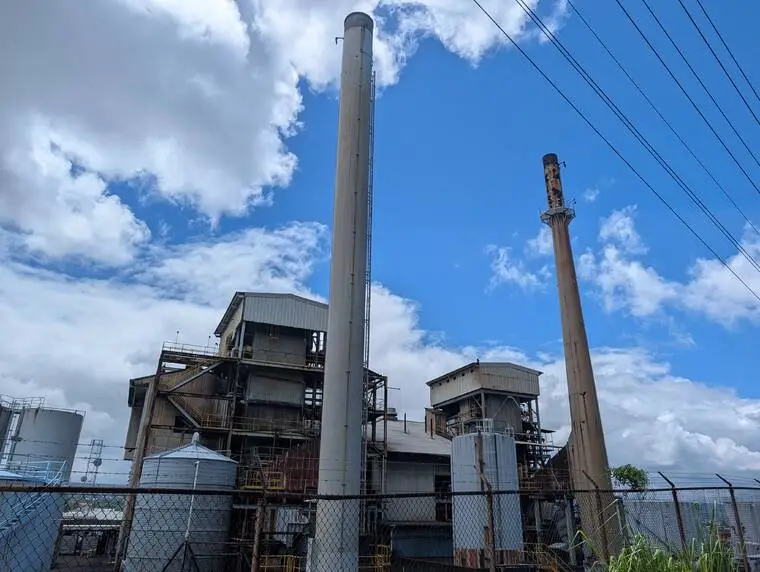
“The Hill plant over there in Hilo has been one of the problem-child plants in the grid for a long time. It’s one of the dirtiest, oldest plants in the state … .” he said. “HECO said, ‘okay, instead of just keeping this clunker going, we’re going to retire it, and they promised that to our state air regulators, and then, all of a sudden when Trump takes office, they renege on that promise.”
The development of a Regional Haze State Implementation Plan is a requirement for states under the Clean Air Act aimed at decreasing pollution-related haze, specifically around national parks.
The state DOH identified the Hilo plant — and others Hawaiian Electric had agreed to decommission including generating stations in Puna, Kahului and Ma‘alaea — as significant contributors to pollution and haze in Hawaii’s two national parks.
“Haleakala National Park and Hawaii Volcanoes National Park are home to unique landscapes and many species of plants and wildlife found nowhere else on Earth,” said Hawaii Attorney General Anne Lopez in a press release announcing the state’s challenge to the EPA. “Residents and visitors deserve to experience these parks with the natural air quality and visibility the RHSIP was intended to protect. We challenge EPA’s action because it is inconsistent with the goals of the RHSIP and is based on an unlawful interpretation of the Clean Air Act.”
Moriwake said there are also broader public health concerns associated with the power plants.
“By cleaning up the air and shutting down these clunker fossil fuel plants, we also benefit our own health,” he said. “Because again, these are some of the dirtiest plants in the entire state, and it definitely causes documented human health harms.”
Read more Chiefs unveil renderings of new $3B stadium schedule to open in ‘31
The petitions were filed with the U.S. Court of Appeals for the Ninth Circuit.
Email Grace Inez Adams at [email protected].