DHHL legal settlement distribution nears end
A genealogical hunt to find beneficiaries of a $328 million Hawaii legal settlement is nearing a likely incomplete end after more than two years of difficult and often emotionally searing work.
Read more USMNT relentless vs. Paraguay to win World Cup opener
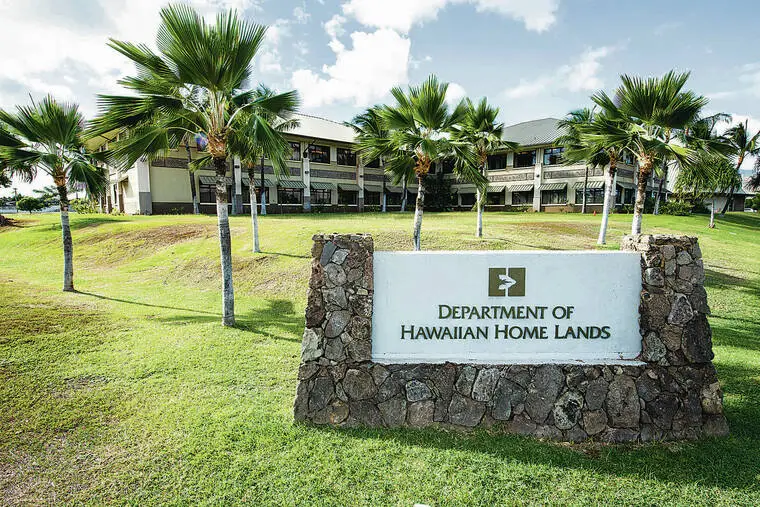
The effort led by court-appointed attorneys represents a final phase of parceling out proceeds from the settlement reached four years ago in a class-action lawsuit filed against the state Department of Hawaiian Home Lands 23 years earlier in 1999.
Kalima v. State of Hawaii alleged that DHHL failed to timely award homestead lots to qualified applicants, who must be at least half Hawaiian and can receive house, farm or pastoral lots under renewable 99-year leases that cost $1 a year and can economically uplift families for generations.
Because state officials strung out the litigation for so long, close to half of the 2,515 beneficiaries in the case died before they could be compensated. So a team of legal representatives was formed to seek out heirs entitled to settlement proceeds.
That work, however, has not been easy. And now, after much success, it’s approaching an end with a few hundred cases involving heirs remaining to be processed, including around 100 where no prospects have been found.
“I describe my job as connecting the dots,” said Scott Suzuki, a local attorney helping find heirs using information from death certificates, obituaries, wills, a genealogical research firm and other sources. “We’re kind of expecting that at some point, the dots are not going to lead anywhere.”
Payouts tapering
Payments to living beneficiaries began in late 2023 not long after a state judge approved the settlement agreed to by state administrators and authorized by the Legislature in 2022.
According to a report filed in April by retired Hawaii judge Michael Broderick serving as special master in the case, $187.4 million has been distributed to 1,305 living beneficiaries, amounting to an average of $143,615 per person.
Carl Varady, who litigated the case on behalf of plaintiffs with fellow local attorney Tom Grande, said all but two beneficiaries previously believed to be alive have been found and contacted, and that the remaining two likely are no longer alive.
Work to identify and contact heirs of deceased beneficiaries began in 2024, and as of December had resulted in $52.2 million being distributed to 1,682 relatives of 583 beneficiaries.
Such heirs, many of whom live in other states, are often spouses, siblings, children and grandchildren. Other relatives entitled to settlement proceeds have included children of a former spouse, children of a deceased sibling, the spouse of a deceased sibling and even decedents of a deceased parent.
The work to find heirs of deceased beneficiaries has been extraordinary and exhaustive, according to Broderick’s report.
Epiq, a class-action claims administration firm, was retained to help connect with beneficiaries and heirs. From July 1, 2023, to Dec. 31, 2025, the firm received 18,469 emails, sent out 5,871 emails, received 22,180 phone calls and made 13,131 calls, according to Broderick’s report.
The report also said there have been 97,570 unique visits to the settlement website, Kalima-Lawsuit.com, which includes documents and ways for heirs to provide administrators with information.
Broderick said in his report that connecting with people entitled to settlement proceeds has been difficult for reasons that include the extreme passage of time since the case began, an inability by DHHL to provide updated contact information for beneficiaries, and many heirs not being aware that a relative had filed administrative claims before 1995 that led to the litigation four years later. He also said some relatives view anything involving DHHL with suspicion, given the agency’s history of poor relations with many beneficiaries.
Imperfect justice
The purpose of the homesteading program is to return Hawaiians to their ancestral lands as reparation for the U.S. government taking Hawaii land after annexing the islands in 1898.
Congress established the program in 1921, and its operation was transferred from the federal government to the state in 1959 as part of Hawaii statehood.
Yet over the past century, only about 10,000 homesteads have been created, largely due to meager funding and much of DHHL’s historical land base being poorly suited for residential development.
About 30,000 applicants are currently on DHHL’s homestead waitlist. The Kalima lawsuit was filed on behalf of 2,515 applicants in 1999 over alleged problems with obtaining homestead leases from 1959 to 1988 that included DHHL losing and destroying applications.
“There’s generations that have been through such hardship,” Suzuki said.
How much of the settlement each person is entitled to varies by their length of time on the waitlist and how their application was treated, among other things.
Settlement money is helping many families economically, but not always in the most just way because benefits have often skipped a generation and in many instances are assigned under probate law dictating how assets get passed to kin for those who died without a will.
Some circumstances of settlement distributions have been heartwarming and helped reunite families. Others have been heart-wrenching, and in some instances pulled families apart over money.
For every deceased beneficiary, Suzuki and another court-appointed attorney, Emily Kawashima, present findings from their research aided by Epiq and other resources to a state judge in batches of about 30 cases at a time.
Awards to heirs are subject to the judge’s approval and involve a hearing at which family members can testify.
Relief and pain
For one hearing in May, Teatatanaroa “Rex” Kaiwi traveled from Hawaii Island to appear at First Circuit Court in Honolulu to convey his appreciation for the work done on behalf of his father, Edward Kaiwi, who died in 2022 and had long-running disputes with DHHL that included being removed from a homestead on Kauai.
“I just want to say thank you for everything that everyone has done,” Rex Kaiwi said at the hearing attended by Varady, Grande, Suzuki and Kawashima. “I know my dad would appreciate that. Thank you.”
Rex Kaiwi, who was 6 years old when the Kalima case was filed and is receiving settlement proceeds split with three siblings, also told the court that his father was a strong advocate for Hawaiian culture and passed it on to his children.
Thurston Gomes appeared by videoconference and thanked everyone involved in the case of his late mother, Sharon Nau, who worked really hard to earn her spot on DHHL’s waitlist and has a surviving spouse who will receive settlement proceeds. “I’m just glad all her hard work is not in vain,” Gomes said.
Read more Yoshinobu Yamamoto loses no-hit bid in 9th, but Dodgers rout White Sox
A couple other cases heard the same day had heavy tension.
Probate Judge Jeannette Castagnetti stated in preliminary remarks that she recognized the importance and difficulty of the process to determine which relatives receive settlement proceeds — and that families can be complicated.
“All of us in the room understand the delays that families have had to deal with,” she said. “It’s not lost on me why many family members are here, and it’s because your loved ones were waiting for their turn for their homes.”
One case Castagnetti had to weigh in on involved a request from the children of one deceased beneficiary who felt that their father’s surviving spouse, whom they said remarried within three months of their father’s death, should share settlement proceeds with them.
The judge explained that state laws of intestacy govern the distribution of settlement proceeds for their father because he died without a will or trust, and therefore proceeds by law pass to his surviving spouse.
“Unfortunately, this is one of those tough situations where families can be complicated for lots of reasons,” Castagnetti told the wife of one of the children. “I’m sure it’s hard for your husband and his siblings.”
Castagnetti, however, held off on a decision to allow possible mediation over a potential claim from the children as creditors in previously helping save their family home from foreclosure.
In another case, the judge helped close a rift between a woman, who was entitled to settlement proceeds for her late husband’s predeceased wife, and two children who were partly raised by their stepmother.
The stepmother informed Kawashima in February that the probate matter was of no concern to her, and that she didn’t want to participate or communicate further, which led Kawashima to recommend that the two children equally split settlement proceeds. But a day before the hearing, the stepmother changed her mind.
“This has been just heart-wrenching for us,” the wife of one of the children told the judge, saying that her husband and his sister believed their stepmom had gifted them the settlement award stemming from hard work of their mother, who died in 2001 and had fought to receive a homestead lease.
Then the daughter explained that she and her brother, along with another brother who is now deceased, bounced around living with relatives when they were young, and said their mom had told them at the time not to worry because one day they would receive a homestead.
The stepmother, participating in the hearing via speakerphone from Texas, apologized to her stepchildren, and said medication she was on affected her initial decision to withdraw.
“I don’t mean to hurt you. I love you,” she told them, adding that she would call them.
Castagnetti deferred a decision pending potential mediation. About two weeks later, Kawashima informed the court that the stepmother agreed to share half the settlement proceeds with her stepchildren, each receiving a quarter share.
Arduous work
The work to find and determine how certain relatives should receive settlement proceeds for so many beneficiaries has been monumental, according to Broderick’s report.
In addition to doing research to identify heirs, the work involves obtaining documents including wills and trusts, interviewing relatives and determining how probate laws in effect when a beneficiary died governs distribution of assets.
“In your typical class-action (settlement), none of this happens,” Varady said.
In addition to the work by Epiq, Suzuki and Kawashima retained a firm called HeirSearch to help locate relatives.
“They have much broader research capabilities than we do, and when we run into a wall it’s been really helpful to have that,” Suzuki said.
Some cases, such as ones with only a surviving spouse or ones where wills spell out inheritances, can be fairly straightforward.
Others can be complex, including one case where 19 heirs were awarded settlement proceeds. They included three surviving siblings and the spouse of a deceased sibling who each received 1/6 of the distribution, and five children of a deceased child of a deceased sister who each received 1/252, or 0.4%, of the distribution.
One outcome that doesn’t sit well with some DHHL beneficiaries is having settlement awards going to relatives who aren’t eligible to inherit a homestead. Under DHHL rules, a beneficiary with a homestead lease can pass their property to certain relatives who are at least 25% Hawaiian.
No such requirement applies to settlement proceeds, and led to one case where a family member unsuccessfully objected to settlement proceeds being awarded to the non-Hawaiian spouse of a deceased beneficiary when a deceased child of the beneficiary had left two minor children who could receive a DHHL homestead.
It’s also possible that a settlement for someone with no heirs could revert to the state and essentially benefit the entity that victimized DHHL beneficiaries.
Administrators of the settlement have worked to avoid that. In one case, Kawashima recommended that settlement proceeds for a deceased beneficiary, whose spouse died later and left no descendants, go to one living relative who would not normally be in line to inherit assets.
Kawashima said it would be inequitable to return settlement funds to the defendant in the litigation.
Any settlement funding that remains after distribution work ends and administration expenses are covered are to be divided among everyone who received a settlement award, unless there’s not enough to justify costs of delivery. If that happens, the balance will go into a DHHL loan fund for homesteaders.
Suzuki said it’s hard to estimate when search efforts will end, but at some point the expense on diminishing returns won’t be reasonable.
“We aren’t going to just give up,” he said. “We want to explore every possible avenue.”
Read more Green signs executive order to preserve 2026 renewable energy tax credit