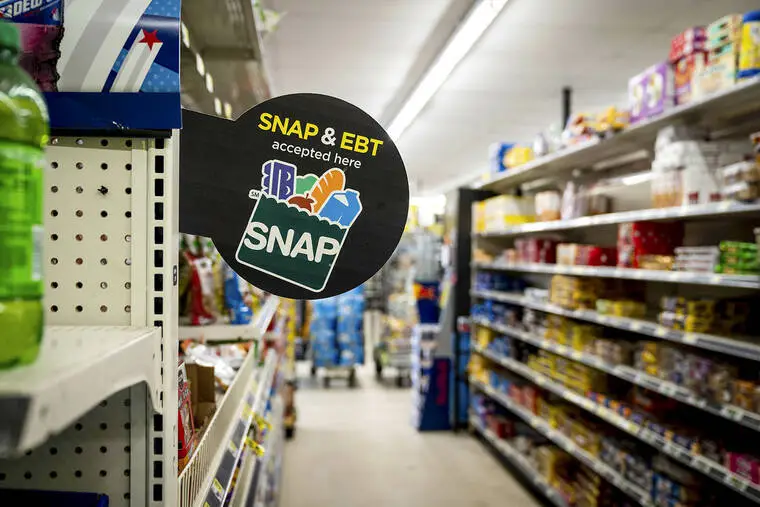
Hawaii among worst states with SNAP payment errors
The state Department of Human Services has backslid on progress reducing federal SNAP benefit payment errors, elevating a risk of future penalties that could cost Hawaii taxpayers.
Read more Turkey beats altered US lineup with last-minute goal in group finale
The state Department of Human Services has backslid on progress reducing federal SNAP benefit payment errors, elevating a risk of future penalties that could cost Hawaii taxpayers.
The U.S. Department of Agriculture on Wednesday published state payment error rates for the food stamp program helping lower-income households, and Hawaii’s error rate rose to 10.92% in the 2025 federal fiscal year from 6.68% the year before after falling from around 21% in each of the two preceding years.
Hawaii’s most recent rate was 17th-highest among states, and a tad above the weighted national average of 10.62%.
USDA noted that the national average last fiscal year represented a slight improvement from a 10.93% error rate in the prior year, but said it was still unacceptable and warned that penalties are scheduled to be imposed as early as the 2028 fiscal year beginning Oct. 1, 2027, for states with error rates at or over 6% as established by Congress last year.
“These payment error rates are further proof that state accountability is severely lacking in SNAP,” Agriculture Secretary Brooke Rollins said in a statement. “USDA has taken historic action to help interested states curb SNAP waste, and I hope other states, regardless of political leadership, prioritize needy families and the American taxpayer over politics.”
USDA said the national error rate represents $10.1 billion in improper payments. Error rates include overpayments and underpayments, though the large majority of errors are overpayments.
Under H.R.1, also known as the One Big Beautiful Bill Act passed by Congress last year, states will be subject to penalties for SNAP payment errors ranging from 5% to 15% of total benefits paid as early as 2028.
For Hawaii, DHS distributed $692 million in federal SNAP benefits last year to roughly 160,000 people. Under the cost-sharing penalty system, the state would be on the hook to pay back 15% of that sum based on an error rate over 10%, or $104 million, if penalties were in effect last year.
There is a provision in H.R.1 that gives states with error rates over 13.33% in 2025 or 2026 an additional year or two before they are subject to the cost-sharing penalty.
DHS said the rise in its error rate for the 2025 federal fiscal year may have been influenced by policy changes related to the federal Fiscal Responsibility Act of 2023 that included implementing SNAP eligibility for Compact of Free Association residents and eliminating net income limits for certain SNAP households.
The agency also said its payment error rate as of June was down to 6.52%.
“Hawaii continues to be focused on reducing the payment error rate moving forward by developing new training materials for staff to address root causes of payment error, implementing new income verification processes, and beginning to utilize AI to provide policy clarifications for eligibility workers to reduce incidents of error,” the agency said in a statement.
For most of the last two decades, Hawaii’s SNAP payment error rate was under 6%.
From 2005 to 2018, the state’s rate ranged from 3.04% in 2010 to 5.84% in 2017, according to USDA data that didn’t include figures for 2015 and 2016.
In 2019, Hawaii’s rate was 6.21%. No data was available for the next two years, but then the state’s rate ballooned to 21.78% in 2022, ranking fifth highest in the country. In 2023, Hawaii’s error rate was 20.94%.
Read more Former Kona man sentenced for slaying, dismembering girlfriend in Arkansas
DHS said the unwinding of coronavirus pandemic waivers for SNAP processing contributed to those exceptionally high rates.
Earlier this year at the state Legislature, DHS officials were lauded for bringing Hawaii’s error rate down to 6.68% in 2024, though concerns also were expressed about potential penalties if further progress was not made.
Scott Morishige, administrator for the benefit employment and support services division of DHS, said during a January briefing to the House Finance Committee that Hawaii’s preliminary error rate for the 2025 federal fiscal year ending Oct. 1, 2025, was about 10% and noted it could be adjusted downward.
Morishige, however, also warned committee members that DHS was facing challenges to improve SNAP payment errors due to major changes H.R.1 made to eligibility that took effect rather quickly, as well as due to the federal government shutdown late last year.
“I think that has impacted the error rate from initially what the numbers were for federal fiscal year ‘25, and likely that, combined with the impacts of federal shutdown, might have an impact for federal fiscal year ‘26.”
One change to SNAP under the new federal law instituted work requirements for more people covered by the program that previously applied to “able-bodied” adults from 18 to 54 years old with no dependents or disabilities or other exemptions.
Under H.R.1, such adults will have to complete 80 hours of work or training per month to remain eligible for SNAP. Work also will be required for older adults, including those ages 55 to 64, as well as adults in households with dependent children that are ages 14 and older. The work requirements also will apply to people experiencing homelessness, veterans and youth ages 18 to 24 transitioning from foster care.
The change to work requirements was expected to affect an estimated 16,000 individuals ages 55 to 64, and an estimated 10,000 households with a dependent, although not all people in those categories rely solely on SNAP. Some immigrants also were excluded from SNAP.
According to a recent Reuters story, more than 4.7 million people nationwide lost SNAP benefits after H.R.1 took effect and through March, or about 11% of participants.
DHS said it doesn’t have a way to determine whether recent changes in the SNAP caseload or case closures in Hawaii are attributable to H.R.1, and noted a slight rise from April to May.
Another change made by H.R.1 was to make states pay more to administer SNAP. Previously there was a 50-50 split, and now the federal government covers only 25% of administrative costs that include staffing.
USDA said that in addition to payment error penalties, states with error rates at or above 6% must submit a corrective action plan detailing how they will address root causes of errors, and that some states also may be liable for a separate financial penalty as part of the SNAP quality control process.
Read more NCAA’s new eligibility cap rule would have changed the game for UH sports