Bouncing back: Coral preservation efforts at Kahalu‘u are paying off
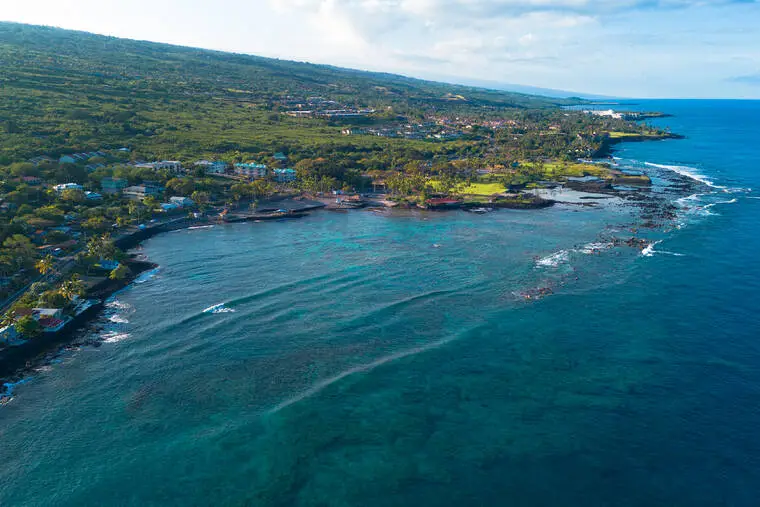
In September of 2015, the coral reef off of Kahalu‘u Beach was not doing well.
In September of 2015, the coral reef off of Kahalu‘u Beach was not doing well.
Warm waters and human presence had left the cauliflower corals that once carpeted the shallow bay bleached and damaged. But now, over 10 years later, the reef has made a comeback, according to the Kohala Center, a nonprofit that has been spearheading restoration efforts at the site.
Read more BI athlete’s corner: Kona’s Koa Kreps is living the dream
For the first time in decades, the water of Kahalu‘u Bay was transformed to a milky white last month, a sign of coral reproduction.
“There were more corals spawning than we could count, than we could observe,” said Kohala Center Coastal Stewardship Manager Kathleen Clark. “There was so much spawning material in the water that the visibility was reduced to a few feet, which we had never observed before in my time.”
The scene was a stark contrast to the state of the reef in previous years following several heat waves combined with heavy human use at the bay, a popular snorkeling destination which receives around 400,000 visitors every year.
“In 2015 and then again in 2019, globally, we had these severe marine heat waves that led to coral bleaching and mortality across a lot of our reefs here in Hawaii, and really all around the world,” Clark said. “One of the species that was hit the hardest was the cauliflower coral, and in Kahalu‘u, we lost about 90% of this once-dominant species in the bay.”
Following the first wave, Clark said, she and her team from the Kohala Center began closely monitoring the remaining corals in the bay, partaking in kilo, a Hawaiian practice of careful observation of nature. And, they noticed something that gave Clark hope.
“What we discovered, kind of initially, was that there were several corals that had survived, so of the 90%, of the hundreds that had been lost, several had survived,” she said. “So, we kind of had this ‘ah-ha’ … moment of like, okay, there were some that survived, what do we do now?”
The answer they came up with was, essentially, nothing.
“One of the things that we thought about as we did this kilo, and as we really spent time thinking about what would have the most impact, we thought about a rest period, giving Kahalu‘u time to breathe and a little bit of space,” Clark said. “We decided to advocate for a rest period during the spawning, or reproductive, season for these corals that had been so heavily damaged.”
She said when they approached Hawaii County, which co-manages the beach park, with the idea of temporarily closing Kahalu‘u, officials were initially hesitant.
“They were like, ‘wait, what? You want to close the beach park, this like very popular community and tourist destination?’” Clark recalled. “And, we kind of explained the why, you know, what we had seen and why we thought this might be a way to not only help promote this successful reproductive period, but also kind of use it as an opportunity to highlight what had happened.”
The county agreed to close the park for two half-days in 2017. While less time than Clark had hoped for, it proved to be transformative for the reef.
“The great thing that happened that year was, we observed these half a dozen or so corals that had survived, we did observe some light spawning,” she said. “So, not only did they survive, but they spawned, so we were ecstatic.”
Read more Commission approves permit for renovation of Kona Seaside Shops
In addition to providing respite to the reef, Clark said the closure provided a valuable educational opportunity. Kohala Center staff and volunteers were present at the park to explain the reason for the closure to visitors and raise awareness about threats facing the corals.
While she said some people were upset about not being able to access the beach, the majority were supportive once they learned about the project.
Since 2017, Clark said, the center has received approval from the county for closures during coral spawning season every year since, including a 10-day period earlier this year.
“Over these years, we were seeing more and more of these little corals pop up around the reef, and we were documenting, we were monitoring, we were in kilo all the time, and we weren’t losing them in the warm times of the year, so we were feeling more and more hopeful that, potentially, these were these kind of more thermally tolerant corals,” she said. “Then flash forward to this year, and I mean, it’s like night and day. Now, there are hundreds of corals growing on the reef.”
However, she said, climate change is creating increasingly more challenging conditions for the corals, especially with the formation of El Nino – which scientists predict could be particularly intense – expected to bring warmer waters and more frequent storms to the Pacific.
“This year, with the impending El Nino event, and potentially another kind of catastrophic bleaching event happening here in Hawaii … I’m just wondering what the outcome is going to be,” Clark said. “The water is already warmer, and then when you add in these other kinds of natural cycles, you get this super-charged thermal stress, heat waves in the ocean that just can wreak havoc on, not just coral reefs, but other other systems and cycles.”
This, in addition to the threats posed by humans in the form of pollution and overuse of the bay, she said, is cause for continued concern at Kahalu‘u.
She said a large part of the Kohala Center’s ongoing work includes educating visitors on how to reduce their impact on the reef to give corals the best chance of surviving and thriving in the warming world.
She said staff and volunteers are present at Kahalu‘u everyday from 8:30 a.m. to 3:30 p.m. encouraging people to use mineral-based sunscreen, float above the reef to avoid stepping on corals, and to appreciate the living nature of the reef and the value it provides.
“Just kind of getting people into that mindset that the reef is all alive,” she said. “It protects our coastlines, it dissipates wave energy, so it’s just super important for our coastal infrastructure — and will become even more important as sea level rise continues to happen. It also provides habitat for a lot of the food fish that we, and so many people around the world, like to eat … and just that connection we all share to the ocean, especially living here in Hawaii … there’s that intrinsic value.”
Read more ‘Mr. Waianae’ established culture that made community proud
Email Grace Inez Adams at [email protected].