Amateur astronomer names asteroid in honor of Puna subdivision
There’s an asteroid, millions of miles away from Earth, that now shares a name and a connection to a place on Hawaii Island.
Read more Rainbow shortstop Elijah Ickes signs deal with the Dodgers
There’s an asteroid, millions of miles away from Earth, that now shares a name and a connection to a place on Hawaii Island.
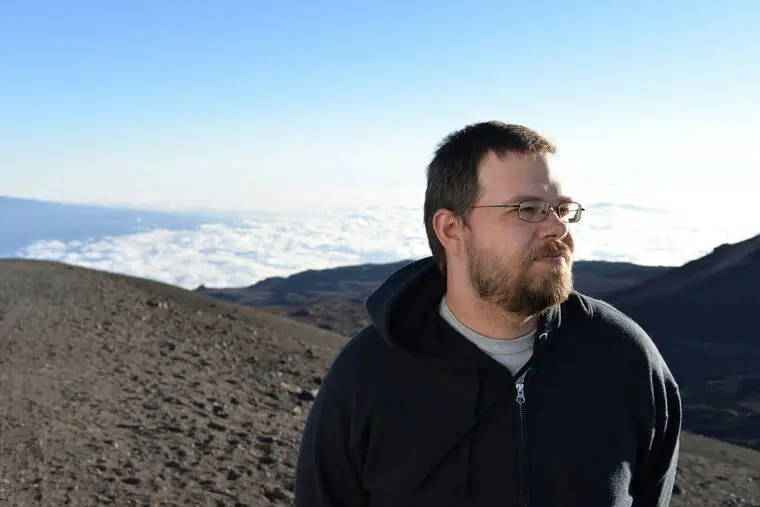
Dubbed “Leilani” after the Puna subdivision that was largely wiped out by the 2018 Kilauea eruption, the asteroid was recently discovered by citizen scientist Todd Fisher as part of an initiative to comb through archival footage from the Subaru Telescope on Maunakea.
When Fisher was asked to help decide what to call his finding, he said it seemed like an opportunity to pay tribute to the Leilani Estates neighborhood, where his sister had previously lived.
“She had a little macadamia nut farm out there in the countryside, and she ended up unfortunately losing her home to the volcanic eruptions,” he said. “I know a lot of people in the area who lost their homes, people who owned and rented there, and a lot of people who were displaced. So we kind of all immediately thought, let’s name it something in honor of the community there.”
He said he and his family debated several names associated with the area, but decided Leilani was the best fit.
“We decided to go with Leilani just because the name is so beautiful,” Fisher said. “In Hawaiian it’s two words: ‘lei,’ which is like a garland that you wear with flowers around your neck, and ‘lani,’ which means heaven. So we thought, okay, flowers in heaven — that’s an asteroid for sure.”
Fisher is not a trained astronomer. He has a background in international politics and economics. He picked up astronomy as a hobby when a friend told him about the Come On! Impacting Asteroids (COIAS) project, an app which allows people to look through archival telescope data in search of not-yet identified objects in space.
Read more Improvements to Hilo’s Mohouli Street to start Monday
“I probably spend like an hour or two every night just on this project. It kind of helps me chill out at the end of the day. It’s a good way to wind down … .” he said. “You’re kind of looking for little objects that move against the background of the stars. All the stars will stay perfectly still, galaxies stay still — they’re all very beautiful — and these little asteroids will just move across the screen. They kind of move in like a linear way, kind of worming their way along the sky.”
Leilani, which has officially named in April, was the first unknown asteroid Fisher has come across since he started looking in 2023.
“Usually, they turn out to be known asteroids, so I was thrilled that this one was brand new,” he said. “It only happens occasionally, but the Subaru (telescope) data is really rich with a lot of unknown asteroids, so almost anybody could start working on it and find something new.”
Fisher said he not only finds citizen science projects like COIAS fun, but also feels they play a valuable role in advancing scientific knowledge.
“I’ve done a lot of projects in the past. For me, it’s a way to kind of just chill out and relax because my mind races, and I like to have an activity that helps me focus,” he said. “But it helps a lot of researchers get a lot of important stuff done.”
He said he encourages anyone who may be interested to give citizen astronomy a shot.
“The human mind is great at picking up patterns and pattern recognition, so almost anybody could do this. It just comes naturally to you,” he said. “There’s a great little walkthrough they have on their website, on the Come On! Impacting Asteroids website. They have a YouTube walkthrough that shows you how to do everything.”
Read more State challenges EPA decision
For more information visit: https://web-coias.u-aizu.ac.jp/.
Email Grace Inez Adams at [email protected].